Fire Damage Restoration Austin TX - Smoke Damage Cleanup
Fire damage restoration in Austin can’t wait until the smoke clears. Once the fire trucks leave, the damage keeps going. Soot settles into walls and fabrics, smoke odor works into everything, and the water used to put the fire out starts soaking into floors and drywall. Our crew moves in fast to secure your home, clean what can be saved and start putting it back together.
Fire Damage Restoration Services for Austin Homes
A fire damages a home in more ways than one. Here’s what our crews handle from the first call to the final cleanup.
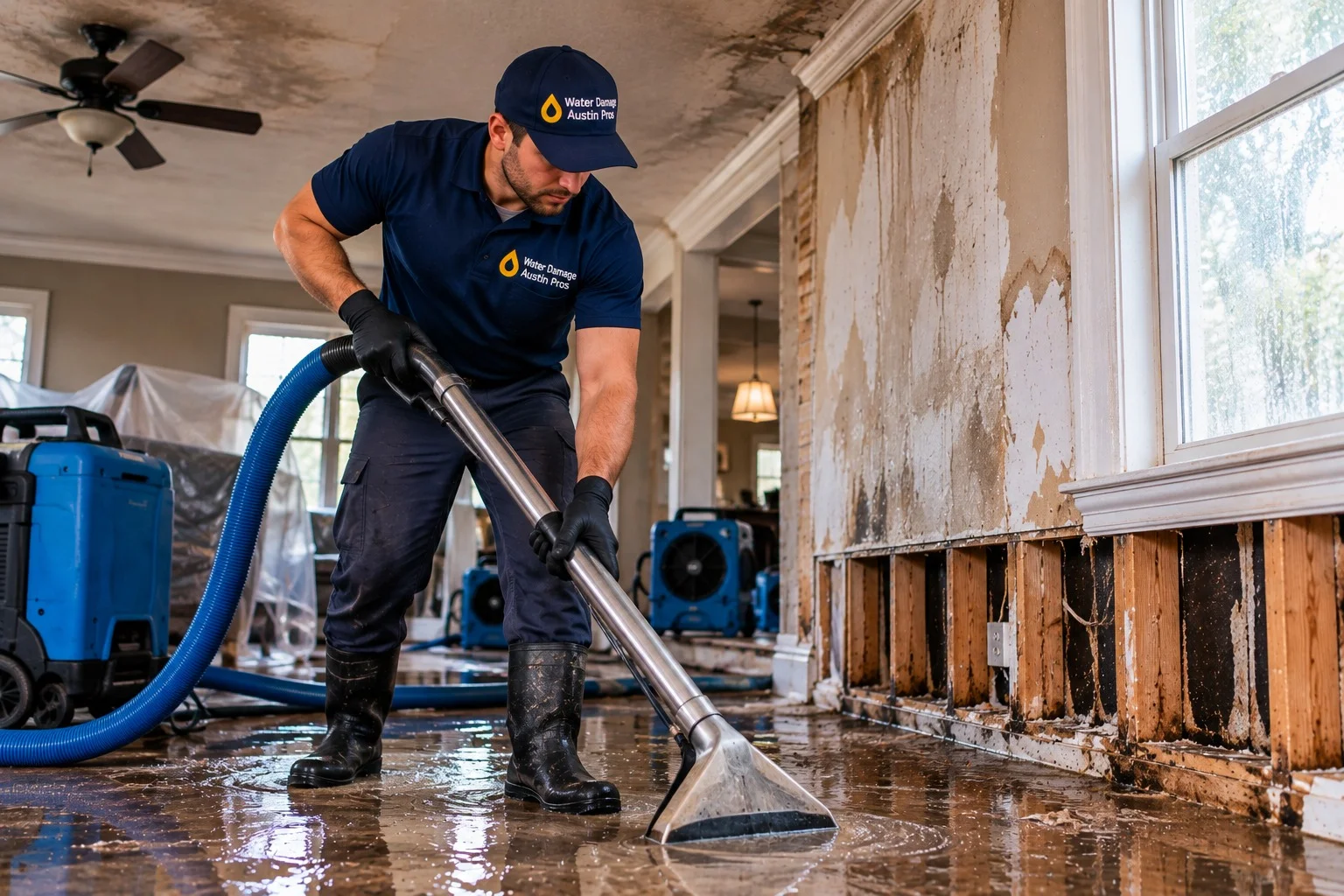
Smoke Damage Restoration
Smoke travels through vents, outlets and wall cavities, staining rooms the fire never touched. We clean walls, ceilings and HVAC surfaces and handle smoke damage repair at the source.
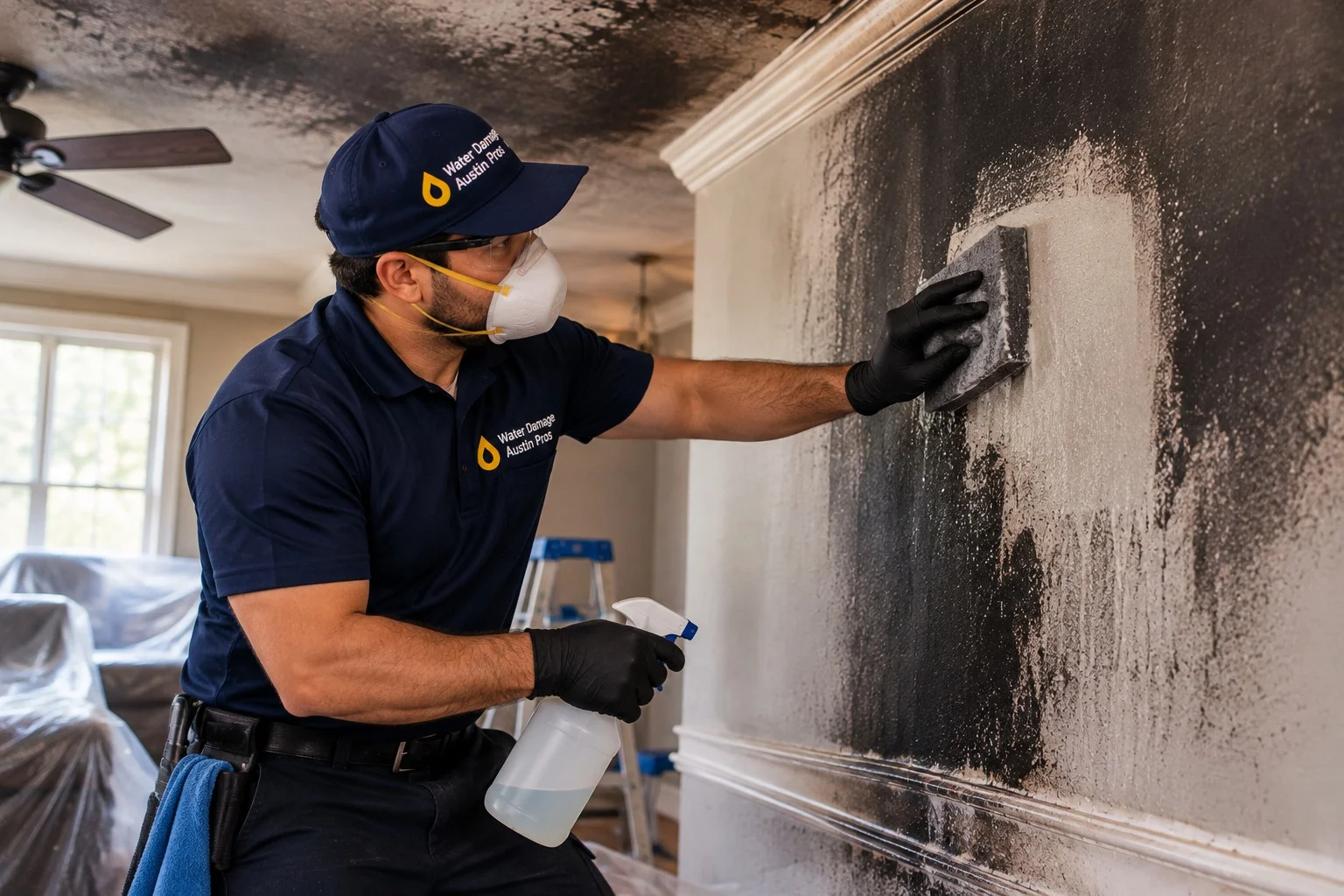
Soot Removal
Soot is acidic and starts etching surfaces within days. We use dry chemical sponges, HEPA vacuums and the right cleaners for each type of soot.
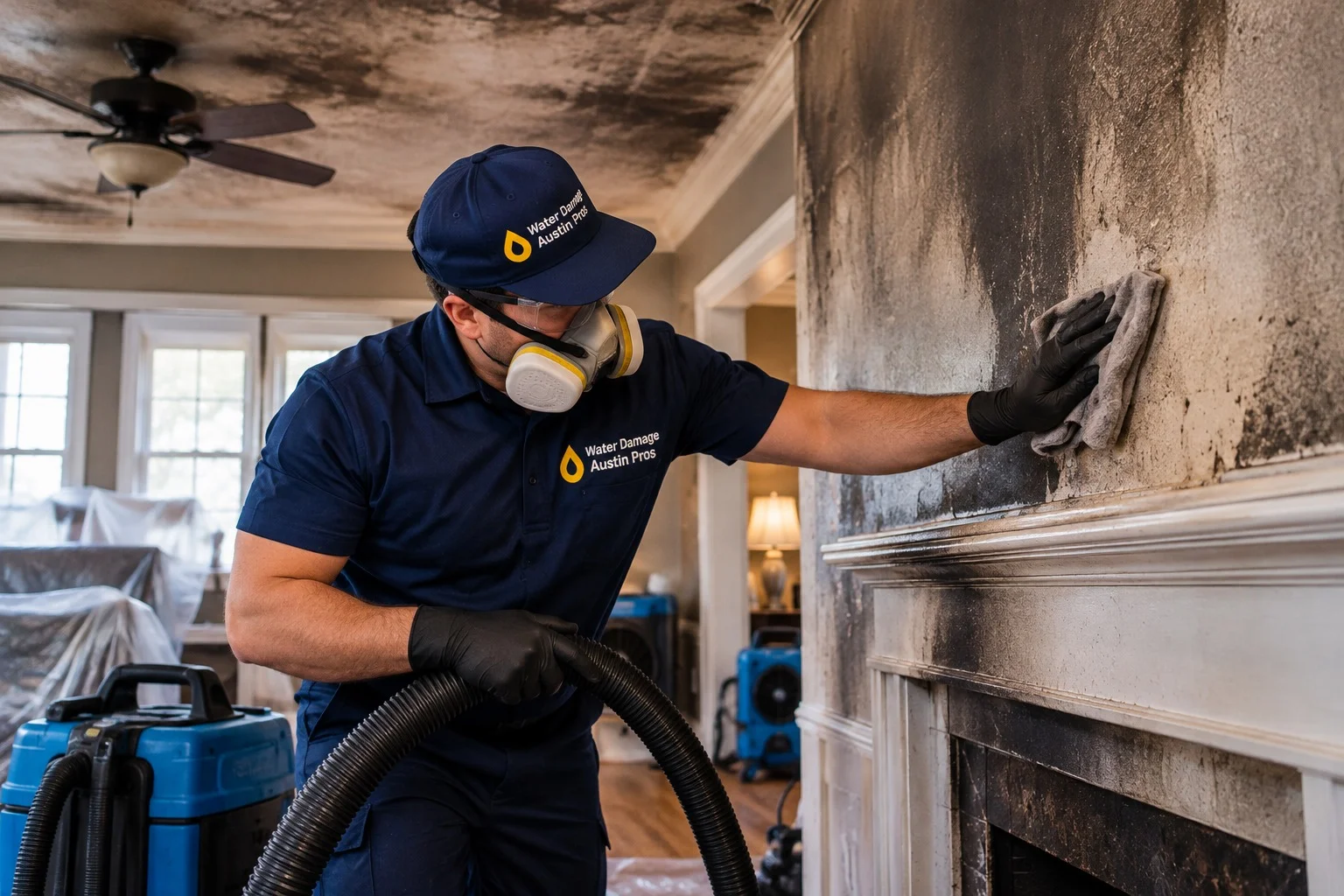
Water Damage From Firefighting
Fire hoses and sprinklers can leave thousands of gallons behind. We extract it and dry the structure before mold has a chance to start.
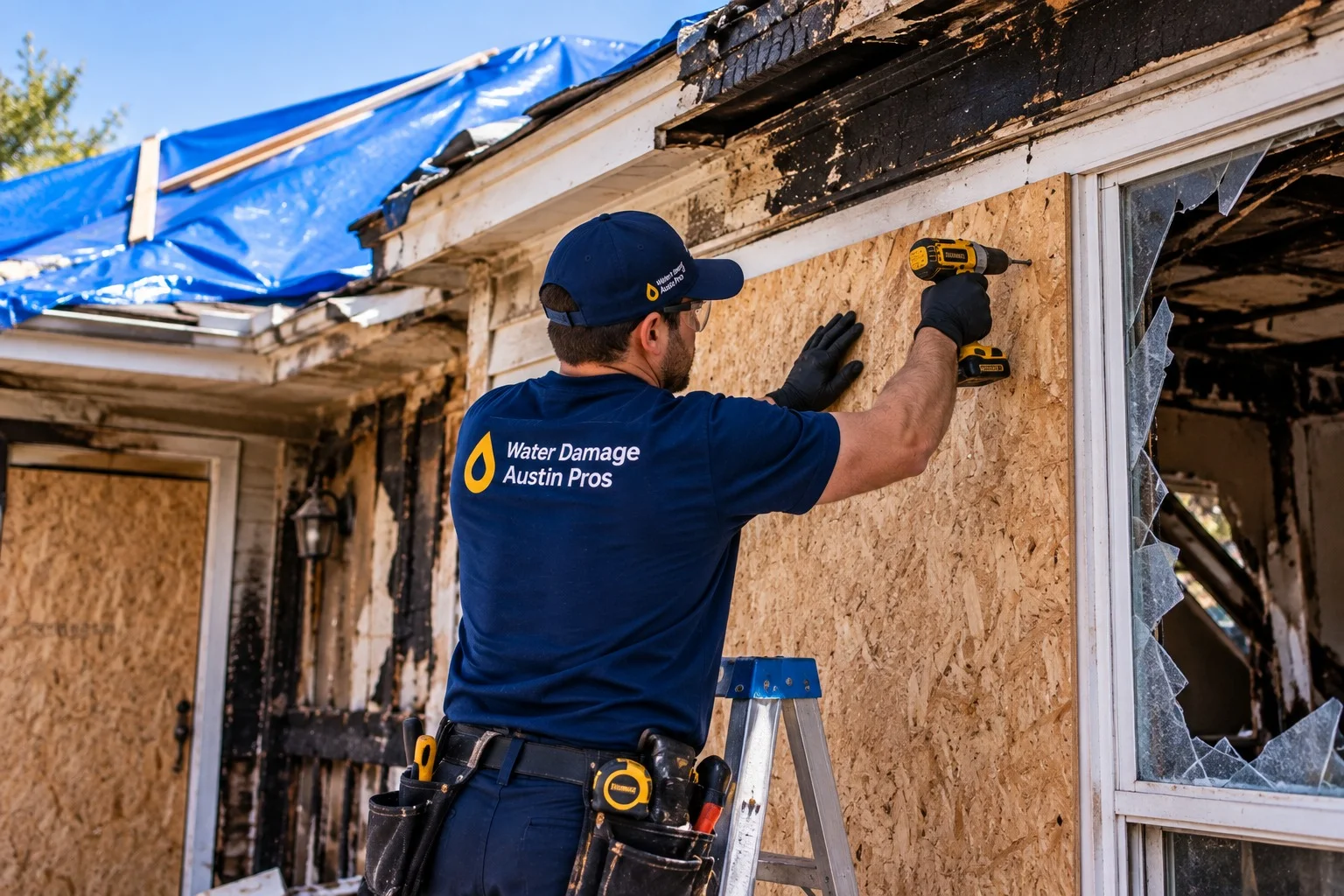
Board-Up and Securing
Broken windows, burned doors and holes in the roof leave your home open to weather and theft. We board up and tarp openings to protect what’s left.
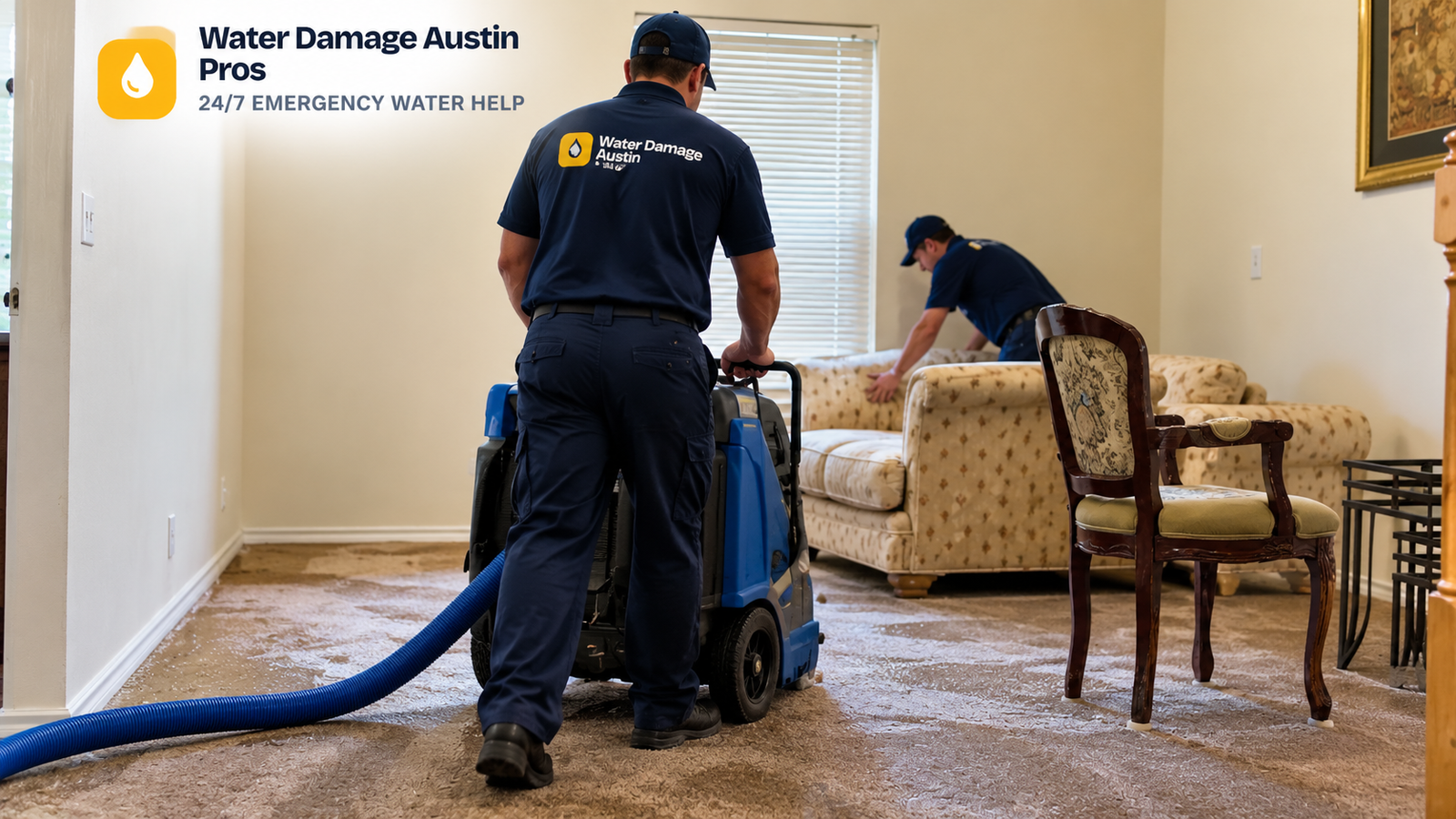
Why Austin Homeowners Trust Us After a Fire
Air fresheners and a coat of paint can hide fire damage for a few weeks. Then the odor comes back on the first humid Austin afternoon, because smoke particles were never removed from inside the walls. Proper restoration follows the IICRC S700 standard for fire and smoke damage, which means finding every surface the smoke reached and cleaning it, not covering it.
- A real person answers every call, day or night
- Inspection of every room, including ones the fire didn't reach
- Odor removed with air scrubbers and hydroxyl generators, not masked
- Cleaning methods matched to the type of soot in your home
- Work that follows the IICRC S700 fire and smoke standard
- Photos and scope of work recorded for your insurance claim
Our Austin Fire Damage Restoration Process
Your Call Starts the Clock
Tell us what burned and whether the fire department used water. We’ll give you an arrival window and tell you what to keep out of until we get there.
Securing the Property
Openings are boarded up and roof damage is tarped so rain and intruders stay out. Standing water from firefighting is pulled out right away.
Smoke and Soot Cleanup
Each surface is tested and cleaned with methods matched to the residue, from dry soot on walls to greasy protein residue after a kitchen fire. HEPA air scrubbers run throughout.
Odor Removal and Fire Damage Repair
Hydroxyl generators and thermal fogging break down odor molecules trapped in framing and fabrics. Then damaged drywall, flooring and finishes are restored.
Why Fire Damage in Austin Spreads Further Than You Think
Cooking is the leading cause of home fires, and in Austin most of them start the same way: a pan left on the stove for a minute too long. Even a small kitchen fire that’s out in seconds can push greasy smoke residue across cabinets, ceilings and the next two rooms.
Austin’s long, hot summers make the problem worse. Heat and humidity drive smoke odor deeper into drywall, insulation and wood framing, and air conditioning systems pull it through ductwork into bedrooms that never saw a flame. That’s why a closed bedroom door doesn’t always mean a clean bedroom.
Wildfire is a growing concern here too. 51% of Austin’s habitable land is now considered at risk of wildfire damage, and the city adopted a Wildland Urban Interface Code to reduce that risk. Dense stands of Ashe juniper, locally called cedar, burn hot and fast along greenbelts and hillsides. Homes on the west side, near greenbelts and in hill country neighborhoods like Steiner Ranch, remember the 2011 Labor Day fires. Even when flames never reach a house, wind-driven smoke and ash can coat roofs, attics and air intakes.
Dry Soot, Wet Soot and Protein Residue: Why It Matters
What burned decides how a home has to be cleaned. Using the wrong method can smear residue deeper into surfaces and make stains permanent.
Dry soot comes from fast, hot fires burning wood, paper and natural fibers. It’s powdery and easier to remove, but it spreads easily if it’s wiped the wrong way.
Wet soot comes from slow, smoldering fires burning plastics and synthetic materials. It’s sticky, smells strong and smears when touched, so it needs specialized cleaners.
Protein residue comes from kitchen fires where food burned. It’s nearly invisible, but it discolors paint and leaves one of the strongest odors of any fire. Fuel and oil soot from furnaces or garages is the hardest of all to remove.
Kitchen Fire Cleanup in Austin Homes
Kitchen fires leave a residue that’s harder to clean than it looks. Burned food creates protein residue, a thin, nearly invisible film that yellows paint and cabinets and leaves a stubborn odor.
Even a grease fire that’s out in seconds can coat the range hood, upper cabinets and ceiling, then spread through the HVAC system to nearby rooms. Wiping it with household cleaners usually smears it deeper.
Proper kitchen fire cleanup means degreasing every surface, cleaning inside cabinets and ductwork, and treating the odor with air scrubbers or thermal fogging so it doesn’t return on the next hot day.
What to Do Before Smoke Damage Cleanup Begins
Your safety comes first. Only go back inside once the Austin Fire Department says the structure is safe to enter.
Keep the HVAC system off so it doesn’t spread soot through the ducts. Don’t wipe walls, upholstery or electronics; soot smears and sets with the wrong touch. Avoid eating or drinking anything that was in the room with the fire. If power was shut off, Austin Energy can confirm when it’s safe to restore it, and if your home isn’t livable, the American Red Cross of Central Texas can help with temporary housing.
Open windows if weather allows, and take photos and video of every room before anything is moved or thrown out. If water was used to fight the fire, stay off soaked flooring and out of rooms with sagging ceilings.
Fire and Water Damage Restoration and Your Insurance Claim
Fire damage is one of the losses homeowner policies are most often written to cover, and that usually includes the smoke, soot and water damage that came with it. What matters is showing the full extent of the loss, including rooms where the damage isn’t obvious. Many policies also cover additional living expenses (ALE) if you need to stay elsewhere while repairs are done.
We record photos, moisture readings in areas soaked by firefighting, and a room-by-room scope of work from the first visit. Contents that can be cleaned are inventoried and packed out so nothing is missed. Your policy decides what’s covered, but complete records make the claim far easier to settle.
Fire and Smoke Damage Cleanup Across the Austin Area
Fire doesn’t keep business hours, and neither do our crews. We respond across Austin, Travis County and Williamson County, including:
A Local Fire Damage Restoration Company Serving Austin
After a fire, the last thing you need is a call center in another state. Our crews work Austin homes every week and know what a kitchen fire in a Travis Heights bungalow needs compared with smoke damage in a two-story Avery Ranch home.
- Phones answered every hour of every day
- Board-up and securing on the first visit
- Inspection before any work begins
What Austin Families Say After a Fire
After the kitchen fire, smoke damage was everywhere and the smell wouldn’t go away. Their team cleaned every surface, treated the walls for soot, and ran air scrubbers for days. They even helped us sort through what could be saved. Our home feels like home again.
A electrical fire in our garage left everything covered in soot. The restoration crew was amazing – they removed all the charred materials safely, deep cleaned the entire house, and got rid of that terrible smoke odor completely. They handled the insurance paperwork too.
When the fire damaged our living room, we thought we would lose everything. Their team boarded up the broken windows the same night, then spent a week restoring the smoke damaged walls and furniture. The attention to detail was incredible. You cannot even tell there was a fire.
Fire Damage Questions From Austin Homeowners
Most smoke-damaged surfaces can be cleaned when work starts quickly. Walls, ceilings, hard furniture and many fabrics respond well to the right cleaning method. Items with deep heat damage or heavy wet soot may need replacing, and the inspection tells you which is which before any work begins.
Soot can contain acids, heavy metals and fine particles that irritate the lungs, especially from burning plastics. That’s why crews wear protective gear and run HEPA air scrubbers. Keep children, pets and anyone with breathing problems out of affected rooms until house fire cleanup is done.
Odor molecules settle into insulation, framing, ductwork and fabrics, not just surfaces. Surface cleaning alone leaves them behind. Removing the smell for good takes air scrubbers, hydroxyl generators or thermal fogging that reach those hidden spots.
Yes. Firefighting water is often a bigger problem than the fire in rooms that didn’t burn. We extract standing water, dry the structure with air movers and dehumidifiers, and monitor moisture so mold doesn’t follow the fire.
It depends on how much of the home was affected, the type of soot, how much water was used and what needs repair versus cleaning. A small kitchen fire is a very different job than smoke throughout a house. Call and describe what happened, and we’ll explain what your situation involves.
Smoke and soot cleanup in a few rooms can take several days. Larger losses with water damage and repairs can take weeks. Drying and odor removal are done when testing says they’re done, not on a fixed schedule.
Other Restoration Services Across Austin
Fire is rarely the only problem a home faces. These are the other services our crews handle.
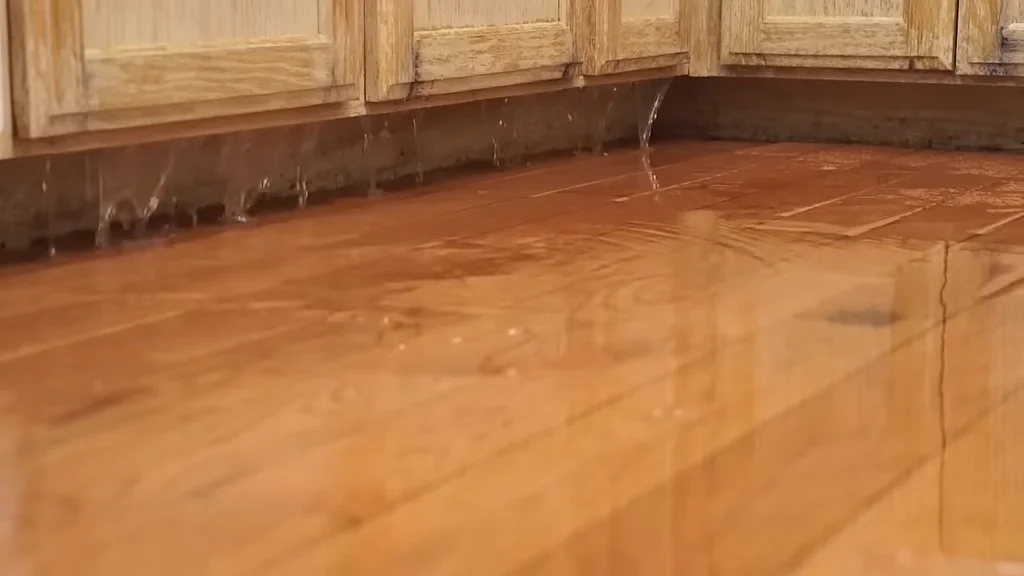
Water Damage Restoration
Burst pipes, appliance leaks and storm flooding all end the same way: water in your walls and floors. We extract it, dry the structure and repair what’s damaged.
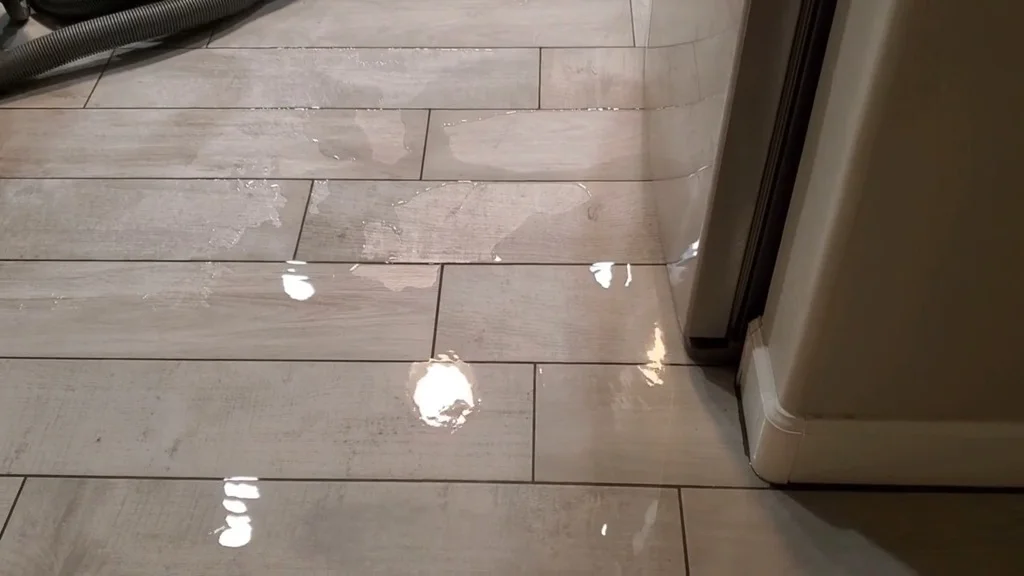
Emergency Water Extraction
Standing water does its worst damage in the first few hours. Truck-mounted extractors pull it out of carpet, pad and subfloor before it spreads.
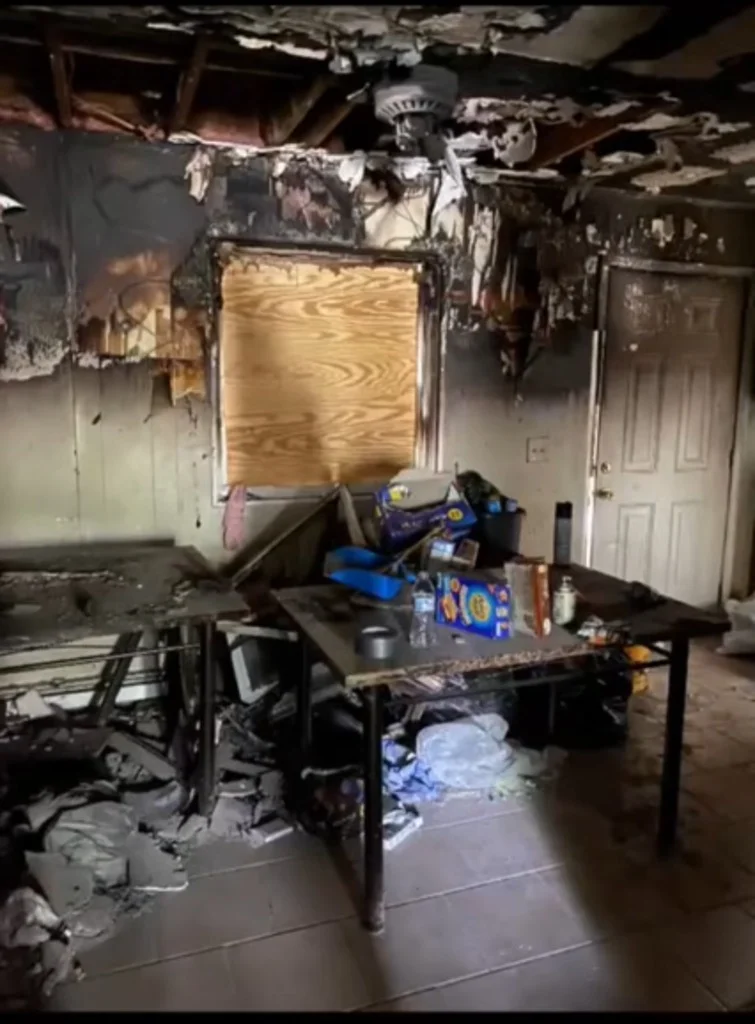
Fire Damage Restoration
The fire gets the headlines, but smoke, soot and the water used to put it out often do just as much harm. We clean, deodorize and restore what’s left.
Mold Remediation
Water left behind after a fire can turn into mold within 24 to 48 hours. We contain it, remove it with HEPA filtration and fix the moisture behind it.
Smoke and Soot Keep Working Until Cleanup Starts
Every day soot sits on walls and fixtures, it etches deeper and the odor sets in harder. Call now for fire damage restoration in Austin and get a crew started today.